

How seasonal foods support your immunity
Summer can be exhausting! The light, the heat, the long days – and all that activity! And then, suddenly, it’s autumn. It’s surprising just how many people think of it as their favourite season. The falling away of the summer heat, the glory of the turning leaves, the beginning of the winds and rains. A perfect bridge to the hibernation of the dark and cold winter months.
According to the theory of the Five Elements in Chinese philosophy and medicine, autumn belongs to the lung. You don’t have to be a genius to know it’s the season when respiratory viruses abound! Every small child is a ‘virus vector’ who brings home the school yard bug, passes it to their parents, who take it to work with them and pass it on – to you! Good for bugs: not so good for people!
So how can you build your ‘defences against the dark arts’ of winter bugs?
Immune boosting fruits and vegetables
🍏According to Chinese medicine, the colour associated with the lung is white, and the flavour is acrid or pungent. The foods might be apple or pear, cabbage or cauliflower, white radish or almonds. Interestingly, both apples and pears are high in quercetin, a flavonoid which supports the immune system, so it might well be true that ‘an apple a day keeps the doctor away’!
🥬Both cabbage and cauliflower are high in vitamin C and something called sulphoraphanes, which help reduce oxidative stress, and according to the Francis Crick Institute, all vegetables from the brassica family, including cauliflower, contain molecules that help maintain healthy barrier defences against pathogens, in both the lung and the gut.
🌟So cabbage is generally good for your immunity, but if you ferment it into condiments such as kimchi and sauerkraut you’re taking it to another level, helping boost your gut microbiome, with all its health giving power. If you’re buying these fermented products off the shelf, always opt for traditionally made ones – maybe from small producers – as pasteurising, preservatives and production using eg vinegar, will probably kill off the live bacteria.
Another useful food, according to Chinese theory, is white radish. It’s both pungent and moistening, and helps to circulate Lung Qi and clear phlegm. Think about how eating a radish seems to immediately clear your nose! In fact in parts of China, there’s the “Little Ginseng” idea which says that if you eat white radish in the approach to winter (and ginger in the summer) you won’t need to visit the doctor. Other pungent immune supporting foods include onion and garlic, and horse radish is brilliant to clear the sinuses, resolve thin mucus and support the lungs.
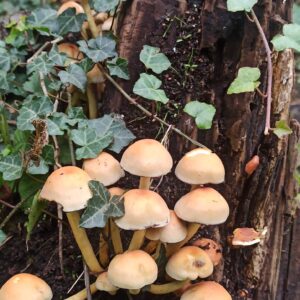
🍄Mushrooms are another highly useful food, which, beyond their specialised beta-glucans and triterpenes, contain vitamin D, selenium and B6, all of which support your immunity. Oh, and never forget the humble potato! They contain vitamins C and B6 and lots of resistant starch and fibre to support your gut health.
One white food I could never get my head round when I was at school was turnips. Just think, all those winter colds could have been fought off if only I could have stifled my prejudice! Turnips contain all the good immune boosting things – they protect cells from oxidation, support white blood cell production, contain loads of vitamin C and anti-microbial and anti-viral molecules: what’s not to love….?! Actually, as I write this, I just discovered what looks like a very tasty recipe for turnip and caper gratin. Could this be the beginning of a love affair!
It’s probably worth mentioning that lots of the active components in fruits and vegetables are found in their skins or just below – so wherever possible, you should eat the skins of your apples and pears – and don’t peel your potatoes!
The power of nuts
Moving on from vegetables, although they’re a different variety, almonds are traditionally used in autumn or winter Chinese cooking, to help support lung function and to relieve coughing – think chicken or bok choy stir fry with almonds. In fact most nuts can contribute to a healthy immune system. Walnuts for example are powerhouses of immune support, containing, anti-oxidants, Omega 3 fatty acids, B6, Zinc and copper. They also act as a prebiotic providing the basis for some gut bacteria to produce anti inflammatory compounds.
Brazil nuts are well known for containing high levels of selenium, which is an essential mineral for your immune system – in fact they contain so much, it’s not a good idea to eat more than a couple a day. And don’t forget cashews, pistachios and pine nuts, all of which provide good things such as zinc and vitamins B6 and E. So much variety; so little time!
And as autumn unfolds, who doesn’t love a roast chestnut! Chestnuts are unique among nuts in that they contain vitamin C, which we all know is an antioxidant that protects your cells, plus loads of trace minerals and other less well known antioxidants.
We can be a bit limited in how we consume our nuts. Of course they make great snacks, but they can be added to cooking in a hundred different ways. They can add crunch, flavour and texture to casseroles or pastries or simply add chestnuts to a pan of brussel sprouts. Here’s a link to the Nuts for Life site which has a huge recipe database and info on everything you could possibly want to know about nuts!
The brilliance of seasonal eating
Chinese medicine believes in seasonal eating, to respect the seasonal energies of the body. As we approach winter we should move away from the light, cooling foods and cooking methods of the summer towards calorie rich foods such as hearty soups, stews, dishes such as risotto, and cheeses. In fact a 2020 study by Stanford University has shown just how much our bodies start to change at this time of year. Changes in metabolism and immunity are just two of the ways we prepare for the coming winter.
🍲Soups are easy to make and a big pot can last quite a few days – so less cooking! How about cauliflower soup, Swedish cabbage and caraway soup, French onion soup or a hearty mushroom soup. You might use a bone broth stock or add some chicken if you’re not vegetarian/vegan, to broaden the nutritional value. And then there are the inexpensive, easy to digest, simple to make dishes like cauliflower cheese, colcannon, or baked potatoes as a main or a side dish.
🥕Just because Chinese medicine associates the colour white with autumn and the lungs doesn’t mean that’s all you’re allowed to eat! The five elements theory associates a different colour to each internal organ, so adding a carrot or a beetroot, some red cabbage, kale or cavolo nero, not only brings colour to the plate, but adds to the nutritional value and immune support of your dishes. Be curious: be creative! The internet is awash with interesting recipes. The links I’ve given above are really just random – you’ll no doubt find your own favourites.
Just one small wag of the finger before I go. White isn’t always right – so no excuses for stocking up on white sugar, pastries and pasta! If you’re in need of something sweet, which also supports your immune system, you should treat yourself to some good quality honey – but that’s for another blog piece!
🍂 Happy eating: Happy autumn! 🍂